
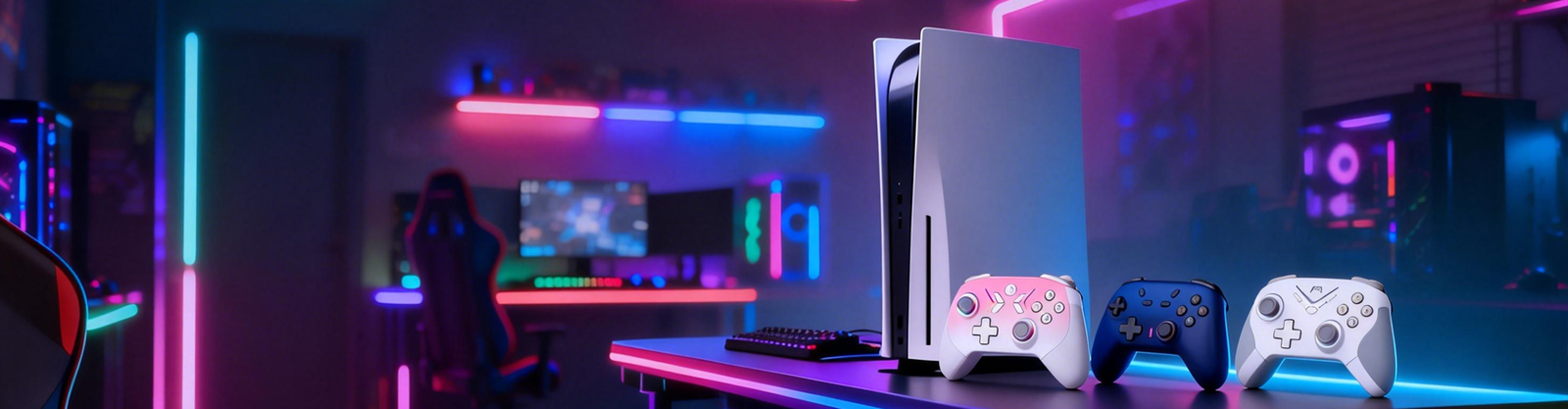
The Complete Guide to Custom Game Controllers: From Concept to Shelf

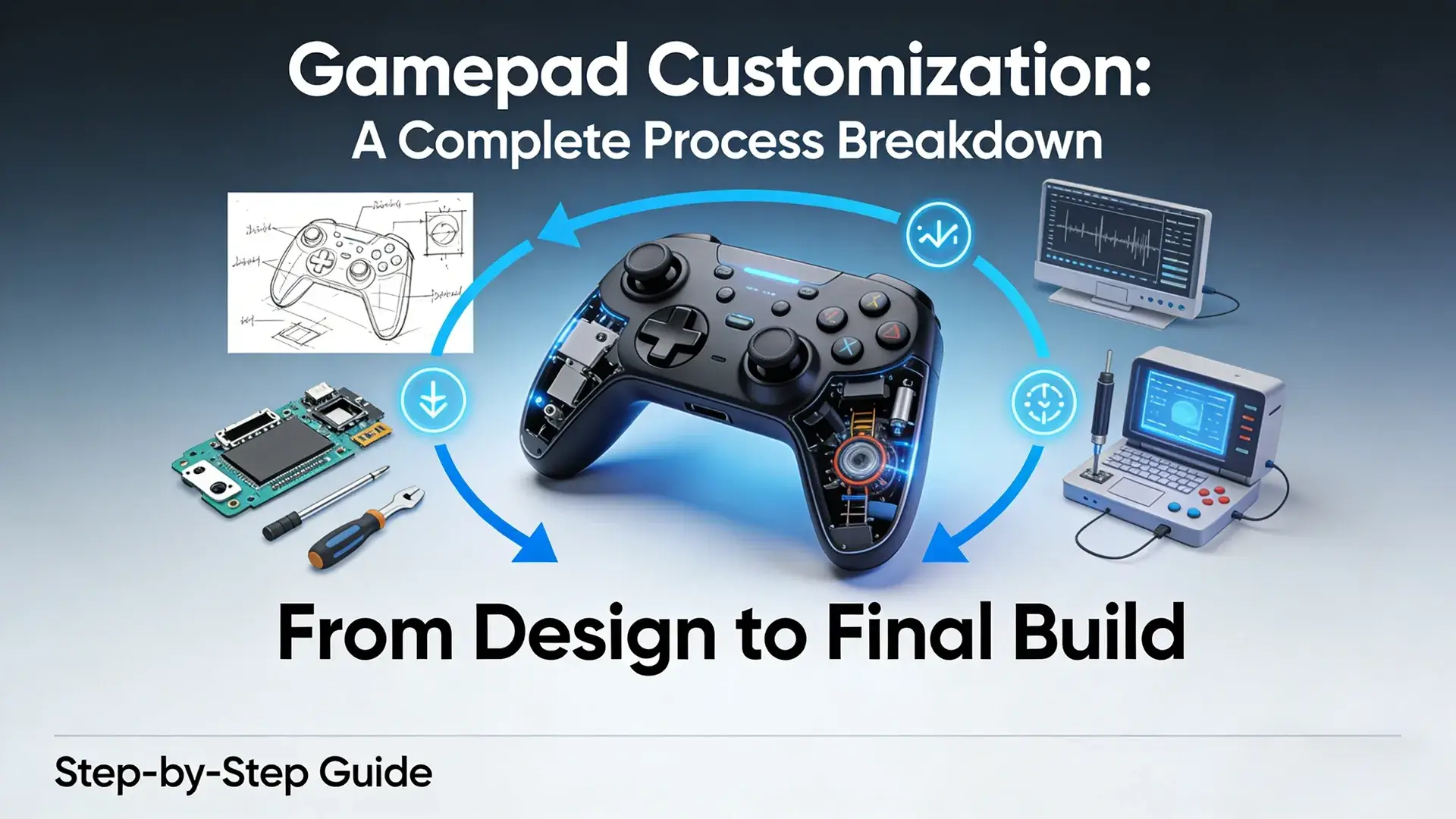
If you are venturing into the realm of custom game controllers, you must fully grasp the potential of this market—the global gaming peripherals sector continues to expand, and player demand for personalized, high-performance controllers has never been stronger. However, once you decide to build your own custom controller brand, the real challenge has only just begun: How do you take a product from concept to launch—defining, designing, and manufacturing it entirely from scratch?
If you are venturing into the realm of custom game controllers, you must fully grasp the potential of this market—the global gaming peripherals sector continues to expand, and player demand for personalized, high-performance controllers has never been stronger. However, once you decide to build your own custom controller brand, the real challenge has only just begun: How do you take a product from concept to launch—defining, designing, and manufacturing it entirely from scratch?
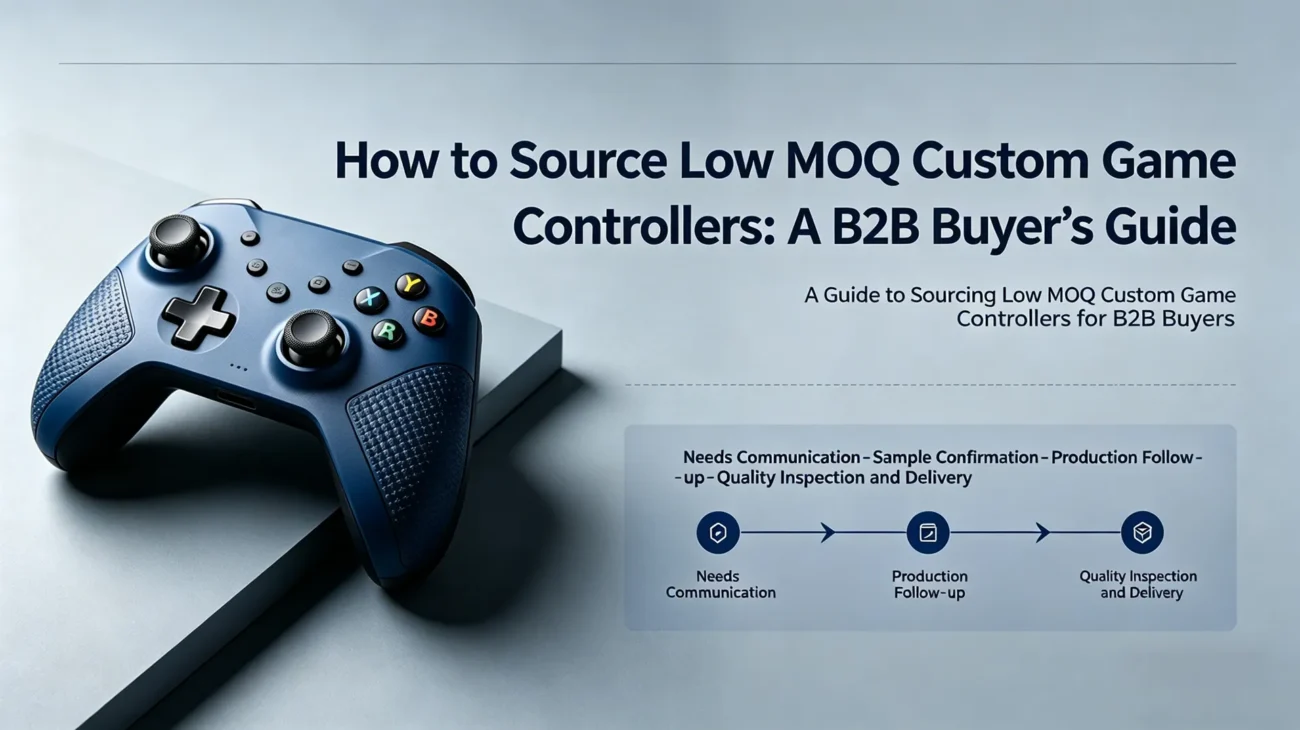
Overview of the Six-Stage Process for Custom Game Controller Manufacturing:
| Stage | Core Tasks | Key Outputs | Estimated Duration |
| 1. Product Definition | Market Research, User Personas, Functional Positioning | Product Requirements Document | 2–4 weeks |
| 2. Design and R&D | Industrial Design, Structural Design, Circuit Design | 3D Drawings, BOM, Functional Prototype | 4–8 weeks |
| 3. Supply Chain Development | Factory Selection, Mold Development, Sample Validation | Molds, Engineering Prototypes, Quotations | 6–12 weeks |
| 4. Pilot Production & Testing | Small-Batch Pilot Runs, Reliability Testing, Certification | Pilot Production Reports, Certification Certificates | 4–6 Weeks |
| 5. Mass Production & Quality | Batch Production, Quality Control, Packaging | Finished Goods Warehousing | 4–8 Weeks |
| 6. Launch & Promotion | Channel Distribution, On-site & Off-site Traffic Generation, User Feedback | Sales Data, User Community | Ongoing |
Phase 1: Product Definition — Driving Decisions with Data
Identify Your Target Players
Before investing a single penny in tooling, you must clearly answer these questions: Who are you selling your controller to? And why do they need *you*?
Take GameSir as an example: the company initially picked up on a key signal from customer feedback—specifically, that 80 million emulator users were repeatedly voicing the same demand: a superior controller to enhance their gaming experience. Brands must follow wherever user demand leads.
Here is what you need to do:
- Establish a co-creation community for gamers, integrating core players into the product definition process.
- Analyze negative reviews of competing products to identify unmet user needs.
- Clearly define the gaming ecosystem within your target market: Does it consist of console gamers, PC gamers, or mobile gamers?
Functional Positioning and Differentiation
The younger generation of gamers has a strong demand for personalization; they seek to distinguish themselves and showcase their individuality through customized products. What differentiating features should your controller possess?
Common Areas for Differentiation:
—Technical Differentiation: Hall-effect joysticks, low-latency Bluetooth connectivity, programmable back buttons.
— Experiential Differentiation: Lightweight design (as successfully validated by the market demand for 59-gram competitive gaming mice), ergonomic grip.
— Visual Differentiation: Interchangeable faceplates, RGB lighting effects, custom color schemes.
Phase 2: Design and R&D — Transforming Ideas into Blueprints
Analysis of Core Controller Components
Designing a custom game controller requires simultaneous attention to both internal and external components:
Internal Components: PCB circuit board, sensors, wireless module, USB port, battery
External Components: Housing, face buttons, D-pad, analog sticks, shoulder buttons, and triggers
Key Decisions During the Design Phase
1. Casing Design: Define the exterior contours, button layout, and ergonomic grip curvature.
2. Button Tactility Design: Select the hardness of the conductive rubber pads or the type of micro-switches.
3. Joystick Selection: Potentiometer-based joysticks vs. Hall-effect joysticks (the latter offers a longer lifespan and higher precision).
4. Connectivity Solution: Wired, 2.4G Wireless, Bluetooth 5.3, or Tri-mode compatibility.
Design Document Preparation
Once 3D modeling is complete, you will need to prepare the following:
• 3D Drawings (STEP, IGS formats)
• Product Specifications (Dimensions, Weight, Materials, Colors)
• BOM (Bill of Materials)
Phase 3: Supply Chain Development — Finding the Right Manufacturing Partners
Mold Development: The Core Barrier to Customization
Game controller housings are typically manufactured using injection molding. This is because injection molding enables cost-effective mass production while simultaneously ensuring high precision and superior surface finish.
Precision Requirements for Mold Manufacturing:
- Injection molding tolerances can be held to within ± 0.02 mm.
- For irregular contours, the tolerance range is ± 0.1 to ± 0.3 mm.
Material Selection (Based on Component Function)
| Material | Characteristics | Typical Applications |
| ABS | Impact-resistant, durable, easy to mold | Housing Body (e.g., PS4 DualShock) |
| Polycarbonate (PC) | High Impact Strength, Transparent | Transparent Housings (e.g., Xbox Phantom Series) |
| PC/ABS Blend | Toughness + Heat Resistance + Wear Resistance | Premium Controller Housings (e.g., Xbox Series X) |
| TPE | Soft, Non-slip | Grip Textures (e.g., Switch Pro) |
| Nylon | Excellent Wear Resistance | Joystick Mechanisms, Trigger Components |
Key Points for Supplier Screening
According to procurement data from 2025–2026, the on-time delivery rate for top-tier suppliers generally exceeds 98%. When screening suppliers, focus primarily on the following criteria:
- Whether they possess an SMT assembly line (for PCB production), an injection molding workshop (for housing production), and an independent testing laboratory.
- Whether they can provide CE, FCC, and RoHS certifications.
- Whether they accept small-batch trial orders (100 – 500 units).
Prototyping and Verification
This constitutes the most critical stage of the entire process. Paying for prototypes (typically $50–$150 per set) helps you filter out “shell companies” (unreliable intermediaries).
Sample Verification Checklist:
— Assembly Precision Check (Key sticking/binding, uniformity of housing gaps)
— Blind Tactile Test (Button feedback, joystick damping)
— 72-Hour Burn-in Test (Wireless connection stability, battery life)
— Drop Test, Button Lifetime Test
Phase 4: Trial Production and Testing—Paving the Way for Mass Production
Purpose of Trial Production
Prior to full-scale mass production, a small-batch trial run (typically 100–500 units) is conducted to validate:
- Mold stability (consistency of injection molding quality)
- Smoothness of the assembly process
- Mold stability (consistency of injection molding quality)
- Smoothness of the assembly process
Compliance Certification
Complete mandatory certifications tailored to the target market:
- CE: European safety standards
- FCC: U.S. electromagnetic compatibility certification
- RoHS: Environmental compliance certification (EU)
Phase 5: Mass Production & Quality Control—Stable Delivery Capability
Production Process Management
The core of the mass production phase lies in establishing a robust quality control system:
- Incoming Quality Control (IQC): Inspection of all incoming components.
- In-Process Quality Control (IPQC): Monitoring of every stage along the production line.
- Outgoing Quality Control (OQC): Sampling or full inspection of finished products.
Packaging & Logistics
Packaging design must take into account:
- Brand visual consistency
- Transport protection (compression resistance, shock absorption)
- Amazon FBA inbound requirements (if applicable)
Phase 6: Launch and Promotion—Ensuring Custom Products Get Noticed
The Traffic Loop: Off-Site Seeding + On-Site Conversion
Drawing upon successful strategies for promoting gaming controller brands, promotion in emerging markets should adhere to the “Golden Formula” of “Off-Site Seeding leading to On-Site Conversion“
- Off-Site Seeding: Maximize brand exposure on platforms such as YouTube, Instagram, and TikTok by collaborating with local gaming KOLs (Key Opinion Leaders) to conduct in-depth product reviews and unboxing videos.
- On-Site Conversion: Capture incoming traffic by implementing conversion mechanisms such as discount codes and targeted brand keyword strategies.
Content Marketing Strategies
Dedicated Forum Development: Establish an exclusive forum on your standalone website to provide users with a platform for discussion. This not only enhances user engagement and loyalty but also drives organic traffic to the site through keywords generated within user conversations.
Player Co-creation Community: Integrate core players into the product iteration process to gather suggestions for improvement and establish technological barriers. Through deep co-creation with users, drive the continuous updates and evolution of your gaming controllers.
Data-Driven Market Selection
Do not limit your focus solely to mature markets in North America and Europe. The case of GameSir demonstrates that by analyzing website traffic data, they discovered that Brazil ranked second only to the United States in terms of visitor volume; ultimately, within just six months, they achieved “Best Seller” status in the Brazilian market. Data is not merely a collection of cold, impersonal figures; rather, it serves as a “navigator” for charting a course through unfamiliar markets.
Common Questions FAQ
Q1: How much initial capital is required for custom game controller manufacturing?
A: This depends on the scope of customization. Simple cosmetic modifications (such as shell replacements) may cost as little as $30,000–$50,000, whereas extensive customization—involving new mold creation and custom PCB design—typically starts at $100,000–$200,000.
Q2: How long does mold development take?
A: From the initial mold design phase to the first trial run, the process typically takes 45 to 60 days; projects involving more complex structures may take longer.
Q3: How can I protect my design from being counterfeited?
A: Sign a Non-Disclosure Agreement (NDA) with your supplier and clearly define intellectual property ownership within your contract. If you opt for an ODM (Original Design Manufacturer) model—where the supplier provides the design—you are legally positioned more as a “seller” than a “manufacturer,” which can afford you greater legal protection in the event of patent disputes.
Q4: What is the typical Minimum Order Quantity (MOQ)?
A: Depending on the supplier’s scale and tier, MOQs can range from 100 to 1,000 units. Startup brands should prioritize sourcing partners who are willing to accept smaller-batch trial orders.
Q5: Are custom controllers compatible with PC?
A: Yes! Custom controllers typically support common standards such as Bluetooth, USB, and XInput/DirectInput, ensuring full compatibility with personal computers.
Conclusion: From OEM to Brand—Your Customization Journey
From product definition to market launch, creating a custom game controller is a comprehensive, systems-level undertaking. The key to success lies not in the perfection of any single stage, but in the seamless synergy of the entire workflow—using data to define the product, leveraging the supply chain to guarantee quality, and utilizing content to connect with your users.
The “blue ocean” of emerging markets is opening up; now is the time to take your custom game controller brand to the global stage.